Three unhurried days at Angkor · map not to scale
At a glance
- Nights
- Three in Siem Reap
- Rule
- Two major temples per half day, rest at midday
- Best for
- Families with teenagers and guests over 60
- Where we stay
- Amansara, or a central 4–5★ hotel named in your quote
- Budget
- From 140 USD per person per day at 4★ (2 travellers), confirmed in your private quote
The short answer
To avoid temple fatigue at Angkor, I plan three nights in Siem Reap, no more than two major temples per half day, a rest at the hotel between late morning and mid-afternoon, and one half day that is not about temples, such as a Tonle Sap boat. A base close to Angkor Wat, like Amansara, makes the midday rest easy.
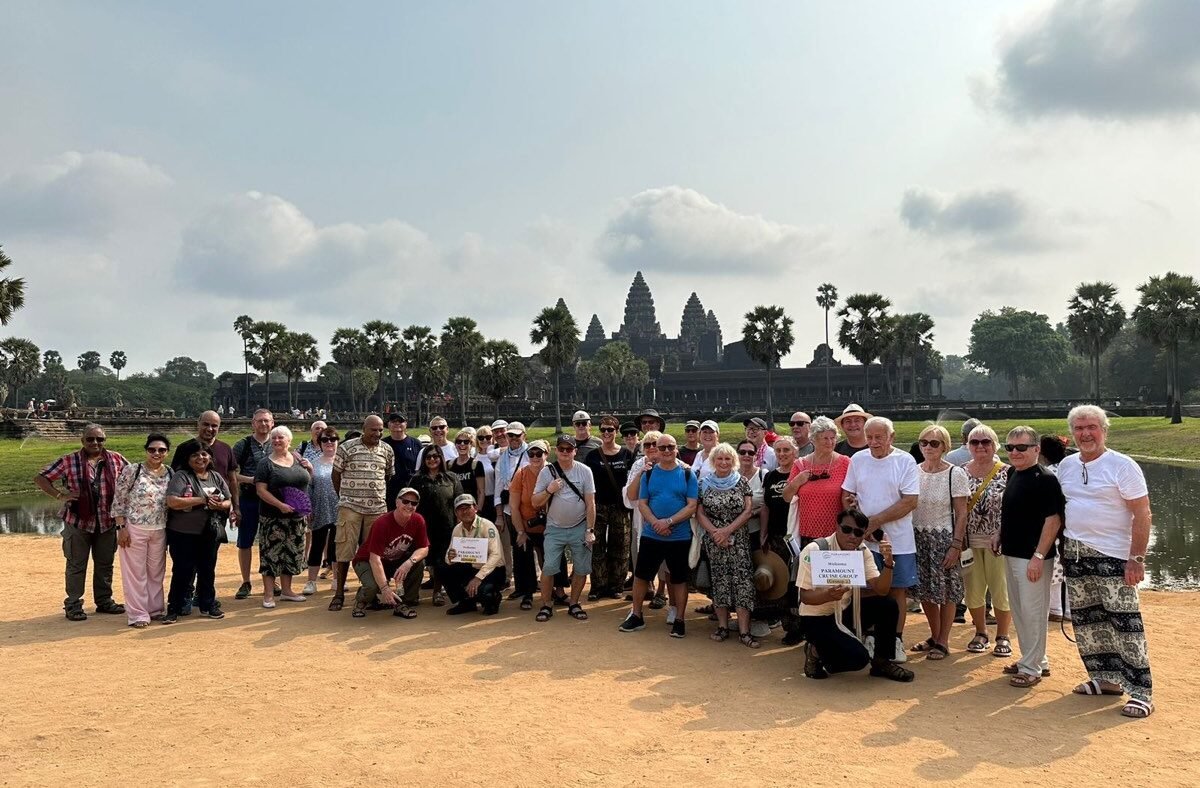
Angkor is one of the reasons people add Cambodia to a long Vietnam trip, and it is also where I see the most tired faces. The temples are spread over a large area, the heat builds quickly after breakfast, and many plans try to cover the famous names in two very full days. By the third temple, even keen travellers stop looking.
Temple fatigue at Angkor is not about seeing too little. It is about seeing too much at the wrong time of day. Here is how I ration Angkor for families with teenagers and for older guests, and the three-day plan I start from.
What temple fatigue at Angkor looks like
It usually arrives on the second morning. Guests who loved the faces of the Bayon the day before now walk through the next gate without stopping. Teenagers stop asking questions. Older travellers start choosing the shade over the carvings. In our experience, the cause is almost always the same: too many temples in a row, with the walking done in the middle of the day.
The fix is a plan built on three rules: no more than two major temples per half day, nothing strenuous between late morning and mid-afternoon, and at least one half day at Angkor that is not about temples at all.
My three-day plan to avoid temple fatigue at Angkor
This plan uses the same sites as Metta Voyage’s published Siem Reap days, spaced out with rest. It assumes three nights in Siem Reap, which is also the usual length at Amansara.
| Day | Morning | Middle of the day | Late afternoon |
|---|---|---|---|
| 1 | Arrive in Siem Reap; transfer and check in | Lunch and rest at the hotel | Ta Prohm, the jungle-covered temple, as a first, shaded visit |
| 2 | Early start at Angkor Wat, then the South Gate of Angkor Thom and the Bayon | Back to the hotel: lunch, pool, sleep | A short visit or nothing at all; dinner in town |
| 3 | Banteay Srei, the finely carved small temple outside the main circuit, with Banteay Samre | Lunch and rest | Not a temple: a boat on the Tonle Sap or, from August to February, a rowing boat through the flooded forest at Kampong Pluk |
| 4 | Free morning or a cooking class | Departure | — |
For guests with a strong interest in history, I add Beng Mealea, a 12th-century sanctuary still partly buried under vegetation, as a half day in place of the boat. It feels different enough from the main circuit not to count as “another temple”.
Rest hours: the part of the plan that matters most
The US CDC warns that heat-related illness can be serious, advises limiting physical activity during high temperatures and recommends seeking shade between 10 a.m. and 4 p.m. I build the Angkor plan around that window. Our guides start early, return to the hotel for lunch and a proper rest, and go out again in the late afternoon when the stone has cooled and the light is better for photographs.
That rest is not wasted time. It is what makes the second and third days enjoyable. For older guests, I also check walking distances and steps in advance. Some temples involve steep stairs and uneven stone; your guide will tell you where to stop and where a viewpoint from the ground is just as good. More on pace for older travellers is in my checklist for parents in their seventies.
Angkor for families with teenagers and for older guests
Families with teenagers
Teenagers engage when they have something to do. Ta Prohm, with tree roots growing through the stone, is usually the temple they remember. A boat on the Tonle Sap, a cooking class or a cycling morning gives them a break from walking and looking. The same logic runs through keeping teenagers engaged on a three-week trip.
Older guests
We recommend three nights rather than two, with the main temple morning on the second day, after a full night’s sleep. A sunrise at Angkor Wat is beautiful but means a very early start; I offer it only if the guest asks and the next morning stays free.
Where to stay: Amansara, and a nature chapter at Shinta Mani Wild
Amansara is a 24-suite Aman resort in King Sihanouk’s former guest villa, ten minutes from Angkor Wat. Thirteen suites have private plunge pools. A daily guided temple excursion with an English-speaking guide is included, as are breakfast, one main meal and afternoon tea. Its Khmer Village House inside the Angkor park hosts breakfasts and cooking classes, and remorks into Siem Reap town are free. For temple fatigue, the short distance to Angkor Wat matters most: you can return for the midday rest without losing an hour on the road. Three nights is the usual length, and our guide covers anything outside the daily excursion.
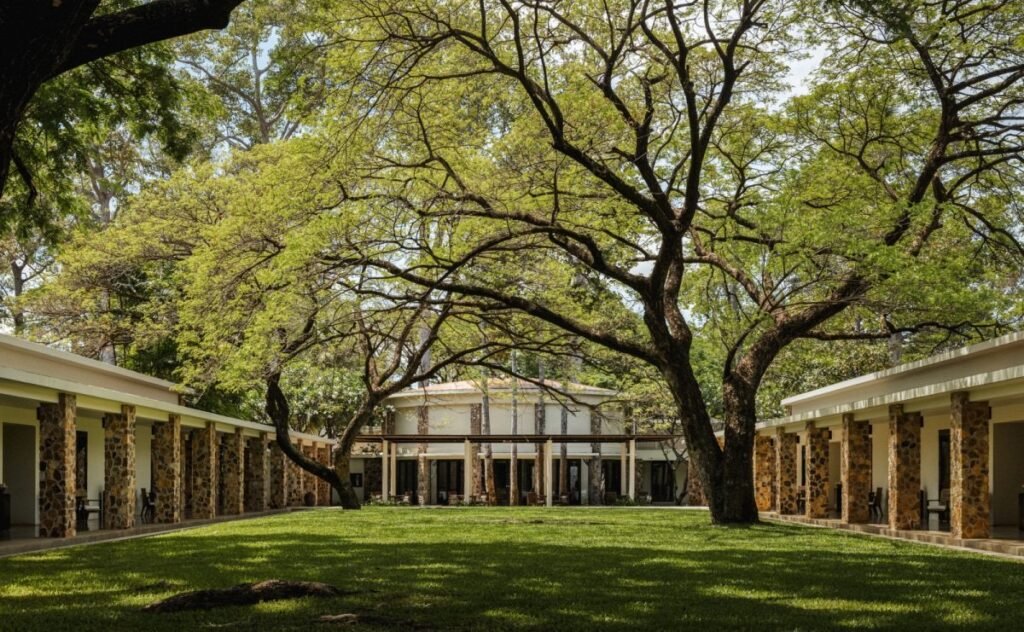
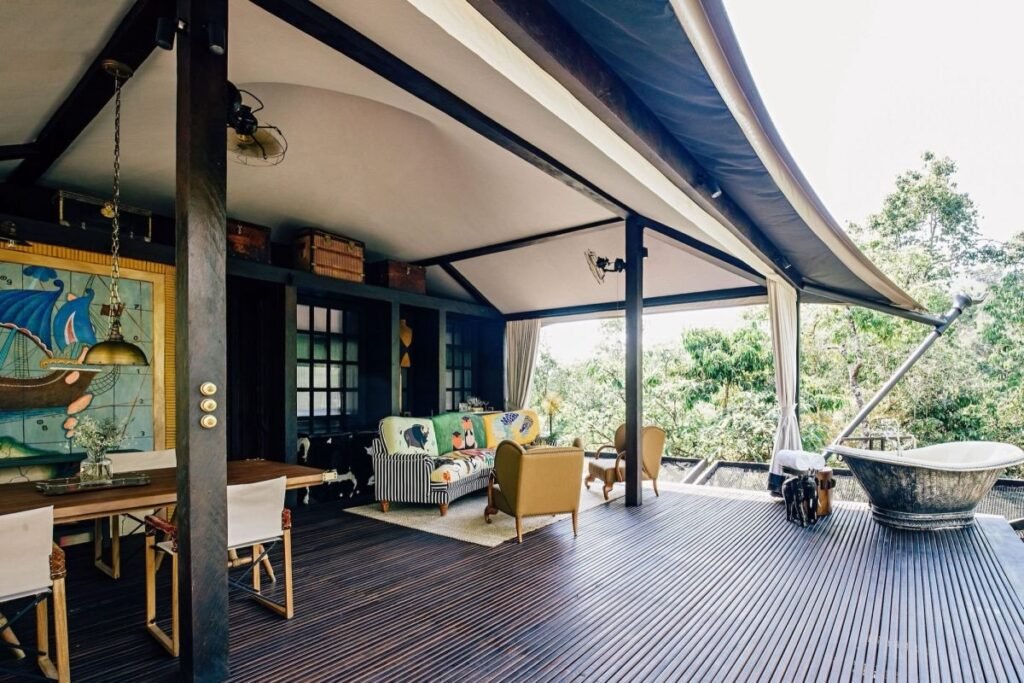
For families who want nature after the temples, Shinta Mani Wild is a 15-tent camp designed by Bill Bensley in the Cardamom rainforest, about two hours by private car from Phnom Penh. Guests arrive by a 400-metre zipline, the rate includes meals, drinks, activities and unlimited spa, and the camp funds a Wildlife Alliance ranger station where guests can join a patrol. Three nights is the minimum. It is a different trip from Angkor, and that is the point: it suits teenagers who have had enough of stone.
Elsewhere in Siem Reap, we choose a central 4–5★ hotel and name it in your quote.
What three nights at Angkor cost
Private trips in Vietnam and Cambodia start from 140 USD per person per day, based on two travellers sharing, 4★ hotels and a private guide and driver throughout, confirmed in your private quote. As a worked example, 14 days at 140 USD gives from 1,960 USD per person. A group of four saves 5%, bringing the from-price to 133 USD per person per day, and a group of six saves 8%, or 128.8 USD. Any 5★ luxury resort or ship moves that part of the trip to our top tier, from 350 USD per person per day and always quoted individually.
Domestic flights are not included and are quoted separately. To confirm a booking we take a 30% deposit, with the balance due 45 days before arrival, and a non-refundable 100 USD per traveller holding fee (kept even if you cancel early), separate from the 30% deposit; your quote shows how it is applied to the final invoice. Card payments carry a 3.5% fee.
Amansara and Shinta Mani Wild belong to the top tier and are quoted individually. Angkor passes are sold by Angkor Enterprise and are listed in your written quote. See Metta Voyage’s 14-day Vietnam and Cambodia family tour and the 14-day three-country tour for their current from-prices.
Mistakes I see most often
- Two nights for Angkor. It forces the main temples into back-to-back full days. Three nights is my minimum.
- Walking in the midday heat. The hours between late morning and mid-afternoon belong to lunch and the pool.
- Treating every temple as a must-see. Five well-chosen sites with time to look beat fifteen seen in passing.
- Adding a sunrise to every day. One early start is enough, and only if the next morning is free.
- Arriving straight from a full Vietnam week. If Siem Reap follows Ho Chi Minh City, keep the first afternoon light. How Cambodia fits is in the questions I ask before adding Cambodia.
Visa rules for Cambodia depend on your passport; please check with the Cambodian embassy before booking flights. We also recommend a refillable bottle, modest clothing for temple visits, and buying crafts from the people who make them.
Sample itinerary, price from and a quote
If you want to see this advice turned into a bookable plan, start with a private Cambodia tour: Cambodia Tours: A Private 10–14 Day Route Beyond Angkor. It has a day-by-day sample itinerary, the hotels I would use and the price logic.
As a guide, a private trip of 14 days starts from 1,960 USD per person (14 days × 140 USD, 2 travellers sharing, 4★ hotels, private guide and driver), about 1,862 USD per person for a group of four and 1,803 USD for a group of six, confirmed in your written quote. Domestic flights are not included and are quoted separately; 5★ and luxury stays are quoted individually.
Request a quote for this route
Sources
Heat and health: US CDC – Travelers’ Health: Cambodia. Angkor tickets: Angkor Enterprise (angkorenterprise.gov.kh). Resort details: Metta Voyage luxury collection pages linked above.
Questions we are often asked
How many days do you need at Angkor?
I plan three nights in Siem Reap. That allows the main temples on two mornings with a rest in between, and one half day away from temples.
How do I avoid temple fatigue at Angkor with teenagers?
Limit it to two major temples per half day, start with Ta Prohm, and add a boat on the Tonle Sap, a cooking class or cycling as a break.
Is Angkor suitable for older travellers?
Yes, with early starts, a midday rest and a guide who knows where the steep stairs are. We check walking and steps before we book.
Why stay at Amansara for Angkor?
It is ten minutes from Angkor Wat and includes a daily guided temple excursion, so returning for a midday rest is easy. It is quoted individually.
Are Angkor passes included?
Angkor passes are sold by Angkor Enterprise and are listed in your written quote.
David — for The Metta Voyage team. Checked against our itineraries and the sources above on 11 November 2026.